
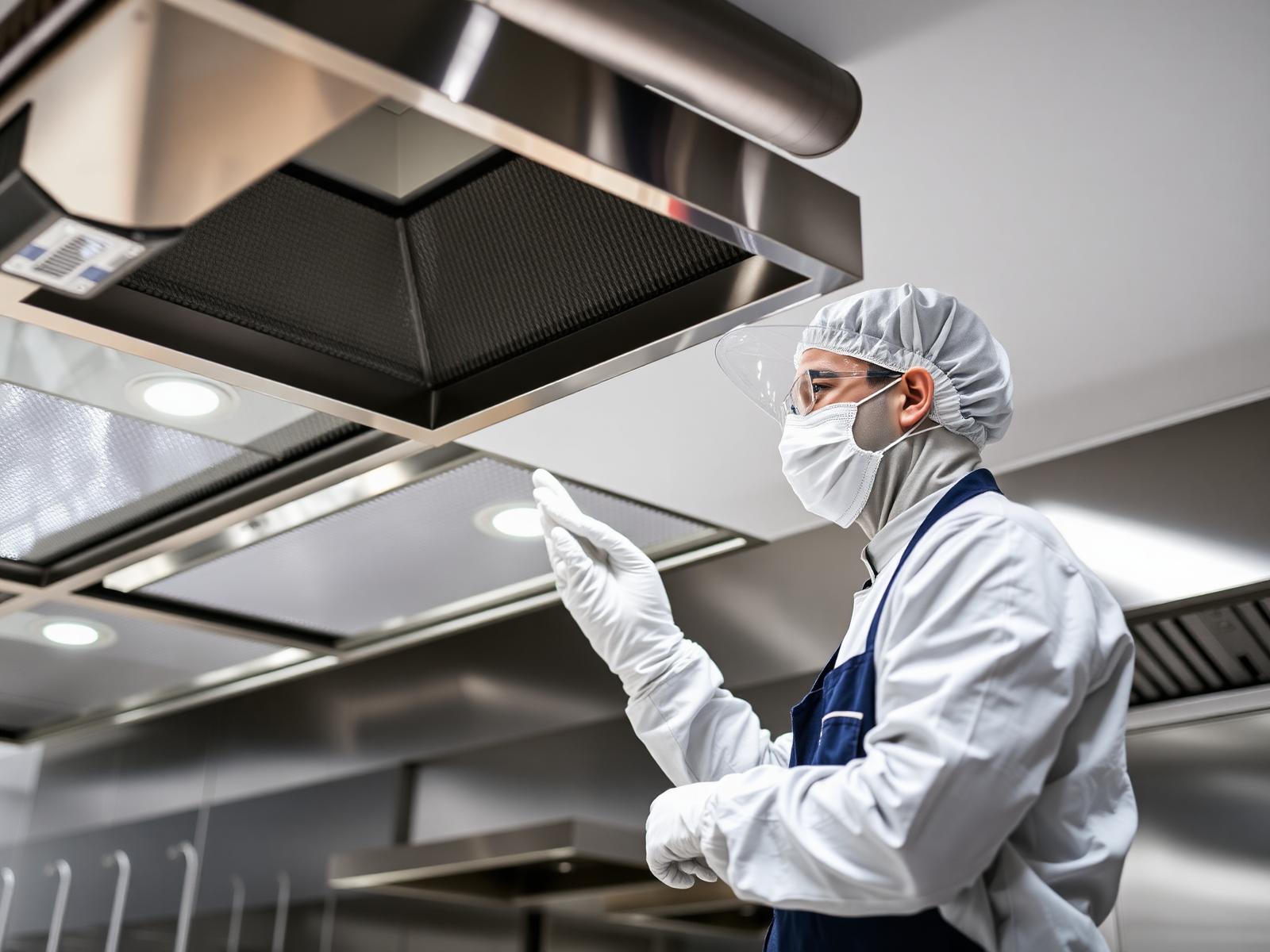
What kitchen extract cleaning actually involves
Kitchen extract cleaning is the systematic removal of grease, carbonised oil and particulate deposits from every component that carries cooking emissions out of a commercial kitchen. That includes the canopy hood and its baffle or mesh filters, the plenum above the canopy, every metre of horizontal and vertical ductwork, access doors, attenuators, the extract fan, motor housing and the external discharge.
A compliant clean is more than a wipe-down. Our engineers strip the system back, hand-scrape and chemically clean accessible surfaces, then use rotary brushing and high-pressure techniques inside the ducts. Where access doors are missing — a common finding on older systems — we install new doors so the duct can actually be cleaned and re-inspected in future.
Cleaning is finished with deposit-thickness measurements taken at multiple sample points. Those readings, alongside before/after photography, feed directly into your post-clean TR19® certificate and your fire-risk paperwork.
Why kitchen extract cleaning matters
Commercial cooking deposits a film of vaporised oil and carbon throughout the extract system. Left in place, that film thickens into a layer of combustible grease lining ductwork, fan blades and discharge stacks. A spark from the kitchen below — a flare-up on a chargrill, an unattended pan, even a faulty appliance — can ignite that layer and propagate fire along the full length of the duct, often into roof voids and onto neighbouring properties.
Beyond fire risk, neglected extract systems quietly fail in other ways: filters block and force grease past the canopy into the duct, fans draw less air, kitchens become hot and smoky, refrigeration works harder, and staff complaints rise. Insurers increasingly require a current TR19® certificate as a condition of cover — and many will refuse to settle a kitchen-fire claim without one.
Our cleaning methodology
- Pre-clean survey: photograph the system, identify access points, measure baseline deposit thickness, agree isolation and safe-system-of-work with the site team.
- Canopy and filter strip: remove and soak baffle/mesh filters, hand-clean the canopy interior and plenum, replace damaged filters where required.
- Ductwork cleaning: open existing access doors, rotary-brush and agitate deposits, vacuum-extract grease, hand-clean around bends and dampers, install new access doors where access is inadequate.
- Fan and discharge: clean impeller, scroll, motor housing and discharge cowl; verify free rotation and balance.
- Post-clean verification: deposit-thickness readings at sample points, full photographic reinstatement record, signed TR19® certificate logged in your compliance file.
How often should kitchen extract cleaning happen?
TR19® Grease links cleaning frequency to cooking intensity. Heavy-use kitchens — busy restaurants, hotels, 24/7 hospital catering — typically require quarterly cleans. Moderate-use operations (cafés, pub kitchens, school dining halls) sit on a six-monthly cycle. Light-use kitchens may extend to annually. Operating hours alone don't decide the frequency: the type of cooking (chargrilling, deep frying and wok cooking deposit grease fastest) and the duct geometry both matter.
Our pre-clean survey establishes the right interval for your site, and our certificates state the recommended next-clean date so your facilities team and insurer always have a current baseline.
Frequently asked questions
What is a kitchen extract clean?+
Removal of grease and combustion deposits from every part of the kitchen extraction system — canopy, filters, plenum, ductwork, fan and discharge — to the TR19® Grease standard, with photographic and certificate evidence.
How long does a clean take?+
A single-canopy restaurant typically takes a half-day to a full overnight shift. Multi-canopy hotel and hospital systems run over 1–3 nights, scheduled outside service hours.
Will you give me a TR19 certificate?+
Yes — every clean ships with a signed TR19® post-clean verification certificate, deposit-thickness readings and before/after photography you can hand to your insurer.