What does TR19 duct cleaning mean?
TR19® Grease is the BESA (Building Engineering Services Association) specification for cleaning grease-bearing extract ductwork serving commercial kitchens. It defines the standard insurers, fire-risk assessors and enforcing authorities use to judge whether a kitchen extract system is genuinely clean — not just whether it looks clean from the canopy.
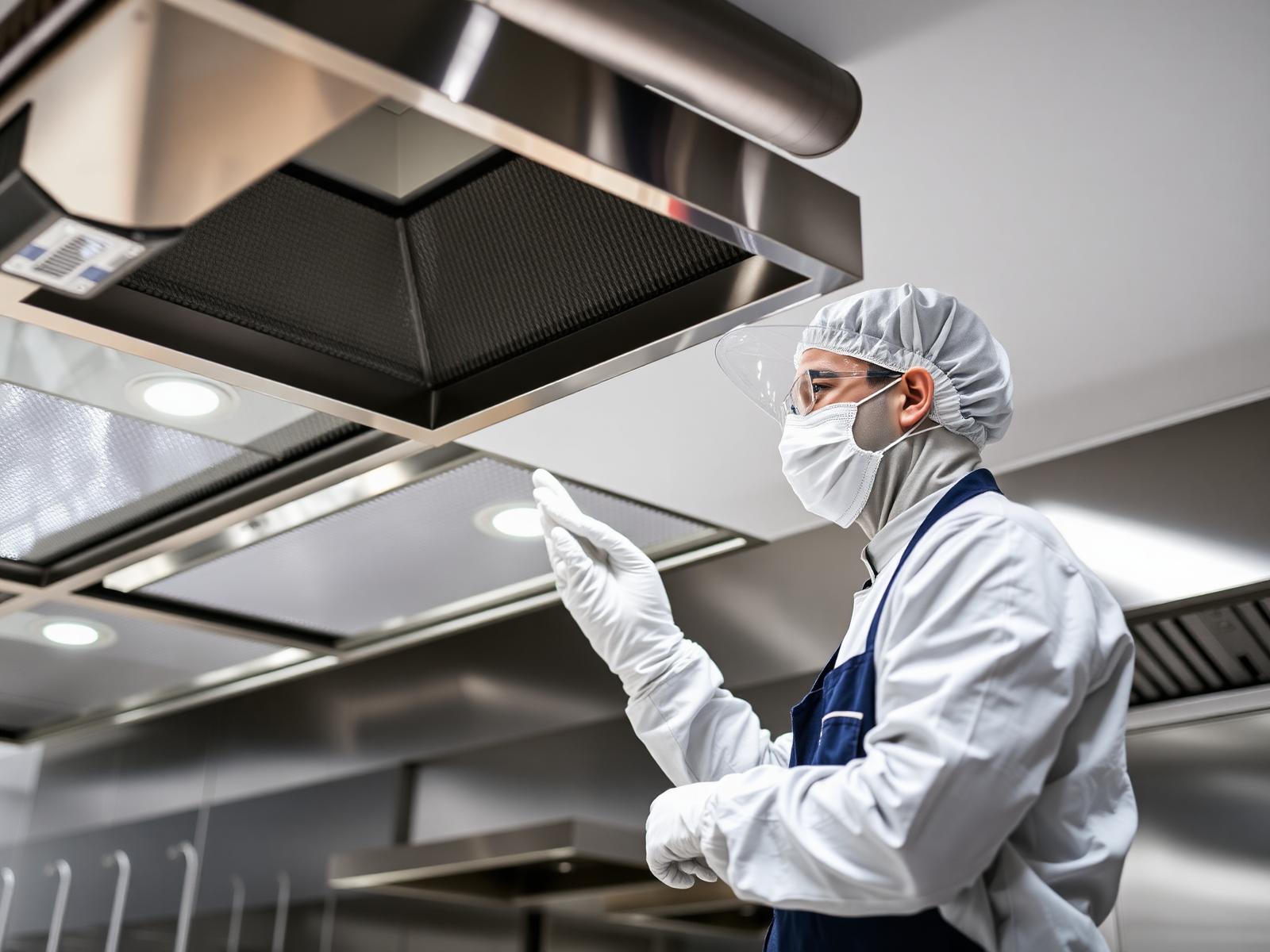
A TR19® duct clean is therefore much more than a brush-down. It requires baseline and post-clean deposit-thickness measurements, sufficient access (BS EN 12097), agitation and extraction of deposits along the full duct run, and a documented certificate at the end. Anything less is not a TR19® clean — regardless of what an invoice says.
TR19® cleaning frequency
TR19® ties cleaning frequency to kitchen use rather than the calendar. The standard categorises kitchens as heavy use (12–16 hours per day, intense grease-producing cooking such as chargrilling and frying), moderate use (6–12 hours, mixed cooking) or light use (2–6 hours, lower-grease menus).
- Heavy use — clean at minimum every 3 months
- Moderate use — clean at minimum every 6 months
- Light use — clean at minimum every 12 months
- All cleans require post-clean verification and a TR19® certificate
Deposit thickness — the measurement that matters
TR19® expresses cleanliness as a measured deposit thickness on internal duct surfaces, taken with a calibrated wet-film comb gauge at agreed sample points. The standard provides target post-clean thresholds and trigger thicknesses above which cleaning must be brought forward.
We record pre-clean readings to evidence the condition we found the system in, and post-clean readings to evidence the standard we left it at. Both are included in the TR19® certificate, alongside duct schematics showing exactly where each reading was taken.
Why insurers ask for TR19® certification
Extract-system fires are among the most damaging losses insurers see in hospitality and catering. A grease-loaded duct turns a contained kitchen fire into a structural fire that travels through risers, voids and roof spaces. Insurers respond by writing TR19® compliance into policy conditions — and by routinely refusing claims where no current TR19® certificate is on file.
Our certificates are designed to be auditor-ready: site identification, system description, sample-point map, measurements, photographs, methodology, operative names, certification body and the next-clean date. Drop the PDF into your compliance folder and your insurer's renewal pack and the question is answered.
Frequently asked questions
Is TR19 a legal requirement?+
TR19® is the recognised industry standard, not a statute. However, fire-safety legislation, insurance policy conditions and HSE guidance all reference its principles — so failing to clean to TR19® routinely breaches both insurance terms and your fire-risk obligations.
Do I need a TR19 clean if my kitchen is barely used?+
Yes — at lower frequency. Light-use kitchens still require an annual clean and certificate. Lack of use does not mean lack of risk, especially where the system was previously heavy-use.