
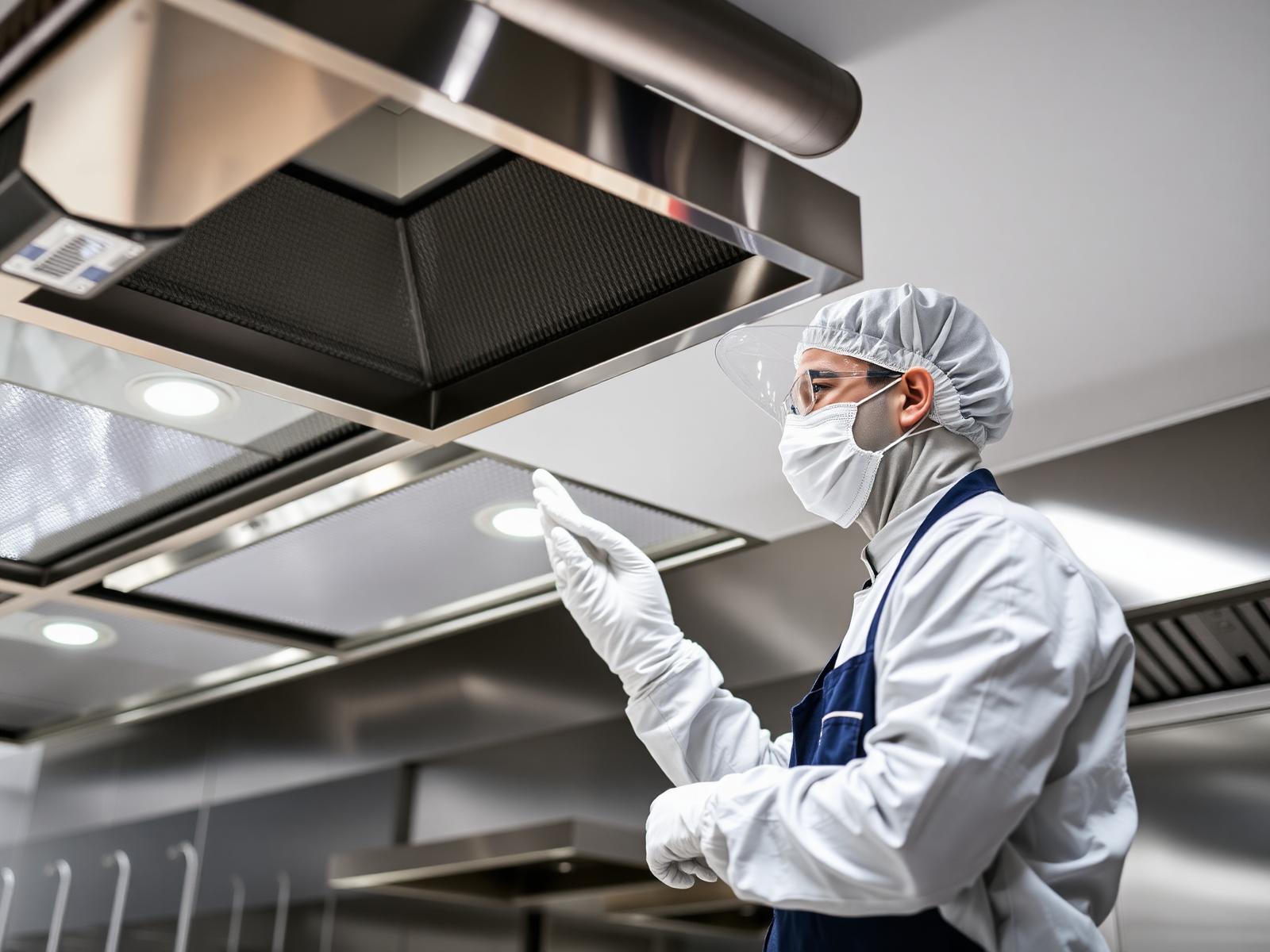
What kitchen ventilation cleaning covers
Commercial kitchen ventilation is more than the extract canopy. Makeup-air supply, transfer grilles, recirculation hoods and any ancillary cooling all sit inside the same hygiene envelope. Neglecting the supply side means contaminated air is pushed back into the kitchen even after a perfect extract clean.
- Extract canopies, plenums and filters
- Full extract ductwork and discharge
- Makeup-air supply ductwork and grilles
- Recirculation hoods (where fitted)
- Fan housings, motors and silencers
Why ventilation cleaning matters for compliance
TR19® applies to grease-bearing ductwork. But fire-risk assessors and insurers increasingly expect the whole ventilation system to be in a documented hygiene programme — not just the grease side. Cleaning extract and supply together produces a single dated baseline you can defend at audit, and keeps airflow balance correct so the canopy actually captures cooking emissions.
Cleaning methodology
- Pre-clean survey and access review
- Containment and safe-system-of-work setup
- Rotary brushing and vacuum extraction of ductwork
- Hand-cleaning of fans, plenums and grilles
- Filter strip, soak and replacement as required
- Post-clean deposit measurement and photography
- Signed certificate and recommended re-clean date
Frequently asked questions
Do you clean supply ductwork as well as extract?+
Yes. Most commercial kitchens have a makeup-air supply system that should be cleaned on the same cycle as the extract so airflow balance and hygiene match.